
Welcome to A Northern Blog. Today’s entry is the 4th in series dealing with mining issues. This article will examine a Canadian company – Noront Resources and its role in exploring and mining development in the Ring of Fire area of Northwest, Ontario. The Ring of Fire has been described as having the largest mining potential in Ontario, larger than what has gone on in the past.
The article on Noront appears courtesy of Glen Dredhart, the publisher of Mining Life Magazine, where the portion dealing with Noront’s work on the Ring of Fire initially appeared. For information on mining in Northern Ontario visit Glenn’s Canadian Mining Portal at
http://www.canadianminingexpo.com
Glenn is also preparing to publish the first Mining Life magazine issue of 2013 featuring reports on prospecting in Canada and the Prospectors and Developers Association of Canada.
Noront Resources Releases NI 43-101 Compliant Feasibility Study in 2012
By Frank Giorno
Noront Resources Ltd. released results, on September 4, 2012, of an updated National Instrument 43-101 – Standards of Disclosure for Mineral Projects (“NI 43-101”) compliant Feasibility Study (“FS”) for a stand alone nickel, copper, platinum group element (“Ni-Cu-PGE”) mine and mill complex at its 100% owned Eagle’s Nest deposit near McFaulds Lake, the Ring of Fire.
“The feasibility study confirms Eagle’s Nest is economically viable and establishes the capital, operating and potential profits to a reasonable level of certainty, which will allow Noront to initiate discussions with various financial institutions to fund the proposed mining project ,” said Olya Yousefi, the Manager of Corporate Communications for Noront in a telephone interview with Mining Life.
The Ring of Fire is located about 500 kilometres northeast of Thunder Bay and about 70 km east of the Webequie First Nation. It is about 150 km west of the DeBeers Victor Diamond Mine. The area consists of muskeg swamps and has the potential to become a major mining site for chromite, nickel, copper, gold, and other minerals.
Noront plans to develop a stand alone nickel, copper, platinum and palladium mine and mill complex at its Eagle’s Nest location near McFauld Lake. The mine, mill and tailing storage facility will all be situated underground.
Noront’s feasibility study assumes that 1.0 million tonnes per year of nickel and copper ore will be extracted from the underground mine using blast hole sub-level stoping. On site processing will produce approximately 150,000 tonnes of high-grade nickel-copper concentrate per year which will be trucked to a rail siding located approximately 300 kilometres to the south.
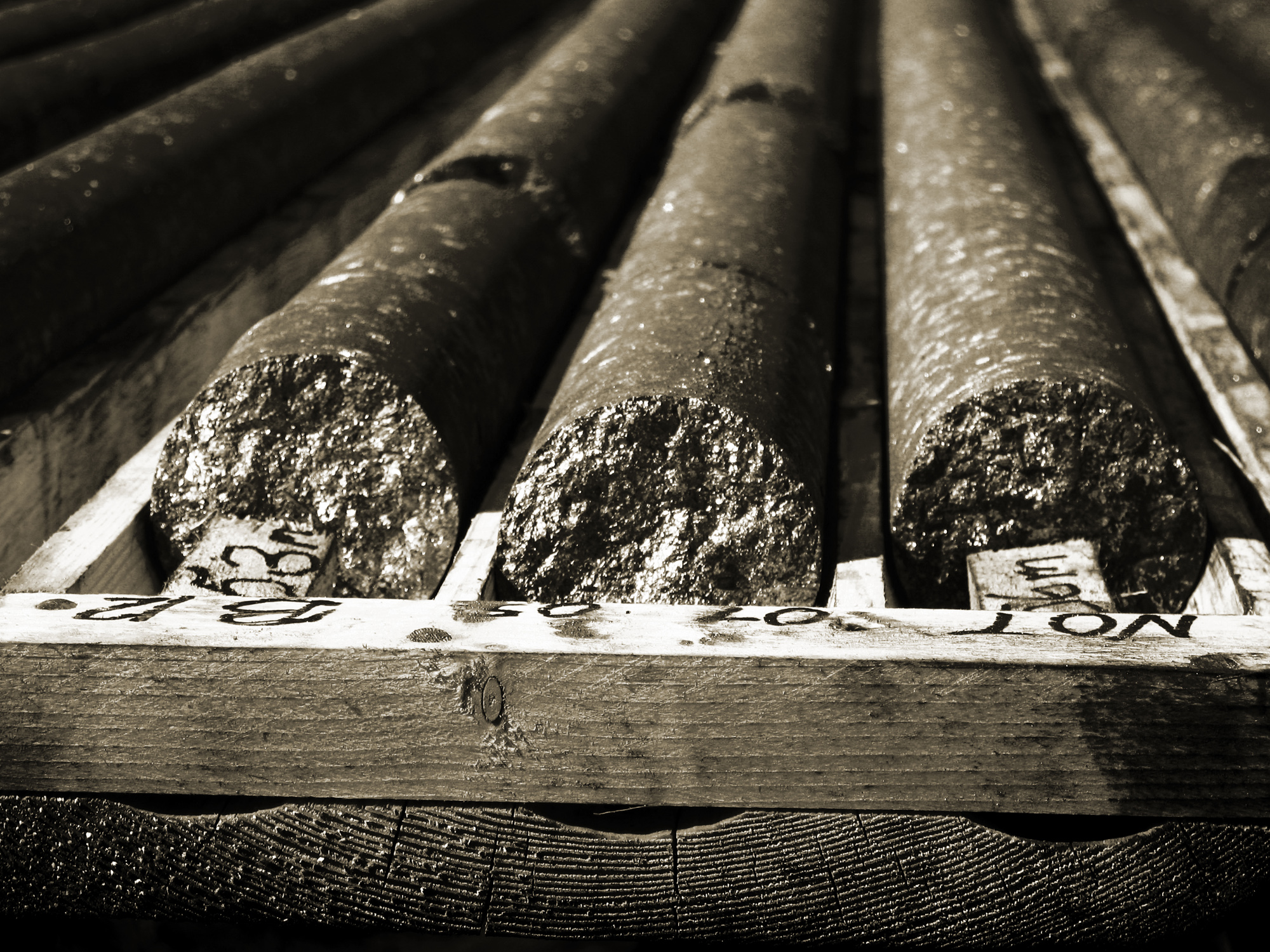
Core samples taken from Noront’s property in the Ring of Fire –photo courtesy of Noront Resources
The feasibility study’s discounted cash flow (“DCF”) model indicates that Noront’s Eagle’s Nest project will produce an after tax Net Present Value (at an 8% discount rate, “NPV(8%)” of $543 million, based on the Assumed Metal Prices).
Other financial benefits include:
- an after tax IRR exceeding 28%;
- an estimated initial capital investment of $609 million;
- an estimated life of mine sustaining capital cost of $160 million;
- estimated operating costs (including road access fees) of $97 per tonne or $2.34 per pound of nickel equivalent to minus $0.31 per pound of nickel net by-product credits;
- an estimated mine life of 11 years; and
- a capital payback period of under 3 years based on a 100% equity project.
“In terms of benefits to the province, the current reserve identified at Eagle’s Nest would generate approximately $420 million in tax revenues,” Yousefi said. “This figure does not include any future reserve increases resulting future exploration efforts in the camp.”
Along with its feasibility study, Noront has also submitted its terms of reference for their comprehensive environmental assessment to the Ontario Ministry of the Environment. The terms of reference will serve as the basis for completing the environmental assessment
“The major challenge for Noront in developing the Eagle’s Nest site is the lack of existing infrastructure in the region ,” Yousefi said.
Transportation
One of the most crucial elements of the infrastructure is the construction of a road that will open up the area and allow materials to be trucked in to develop the site and ores and concentrates shipped out.
Noront’s feasibility study assumed that ore concentrate would be trucked along a north-south, all season road to a CNR loading facility near Nakina where it will be transferred to rail for further shipment.
The proposed north-south route has been proposed by Cliffs, a multi-national, diversified producer seeking to develop their chromite assets in the Ring of Fire.
In its pre-feasibility study, Noront assumed an east-west road would be the primary means of access to the Ring of Fire. At this time, Noront continues to identify this east-west route as an alternative to the north-south corridor, as require of the environmental assessment process.
All season North-South Road
Noront revealed that the Ministry of Northern Development and Mines (MNDM) in a letter dated August 10, 2012 said they were in early stages of discussion with Cliffs Natural Resources regarding a north – south all-season road that would connect the Ring of Fire to existing provincial transportation routes and railway lines. The letter confirmed the Province’s intent to contribute financially to develop the proposed all-season road subject to various environmental, regulatory and financial approvals.
In the letter, MNDM advised Noront that “the current expectation is that the all-season road would be made available for use by industrial users other than Cliffs, with access fees generally based on proportional road usage, although specific terms are still to be determined.”
Details on the estimated capital costs of the proposed north-south road have not been provided to Noront. However, Cliffs Natural Resources has publicly stated that the cost of their proposed integrated transportation system is budgeted at $600 million. This cost is consistent with previous work completed by Noront on this alternative and was used as the basis to establish road usage costs in their feasibility study.
“The decision of the Province of Ontario to financially support the north-south road corridor pending environmental approval, is a very positive development in unlocking the mineral wealth of the Ring of Fire, “said Wes Hanson,President and CEO of Noront states.
“Our discussions with the Province have confirmed that the all season
road will be accessible to all industrial users including Cliffs and that the costs to use the road will be based on proportional usage, a critical consideration for Noront as our concentrate shipments represent less than seven percent of the currently identified ore haulage along the corridor, “ Hanson added.
Refining Noront’s Ore Concentrates

Diagram of Noront’s proposed milling operationplanned for the Ring of Fire-photo courtesy of Noront
Another component of Noront’s proposal that needs to be determined is where it plans to refine the nickel ore concentrated produced by the on site milling operations.
“The logical destination would be Sudbury where both Xstrata and Vale INCO are operating nickel smelters and where there is currently excess capacity.” Yousefi said. “Our initial testing indicates that this would be a marketable concentrate for most of the world’s existing nickel smelters.”
First Nations Relationships
“Noront has worked hard to establish solid relationships with local First Nations communities near the Ring of Fire discoveries.” Yousefi said. “We want to ensure that the communities of north-western Ontario realize the benefits of mineral development through long-term jobs and business opportunities.”
“We are very active in community consultation to ensure the communities fully understand what we propose to do, when we propose to do it and how will it impact their communities now and in the future. We have also focused a great deal of effort on the young people in the communities where we have been active.. Each summer, we hold mining camps aimed at introducing the young people to the exploration and mineral development industry. We hope to highlight to the young people the importance of staying in school, what jobs will be available in their region in the future and what each job entails in terms of training and education. Noront hopes that future geologists, engineers, managers and other specialists originate from the various communities surrounding the Ring of Fire,” she added

First Nations student examining mineral samples photo courtesy of Noront Resources
Exploration Potential
On July 9, 2012; Noront released the results of its winter drilling program which included some positive results. Noront reported that all six holes that were drilled intersected low-grade nickel sulphide mineralization, suggesting that the ground based geophysical surveys are a valuable exploration tool going forward. This system has dramatically increased the Company’s success rate in testing multiple targets within the Ring of Fire claims for nickel sulphide mineralization. The fact that all holes from the late winter program intersected nickel sulphide mineralization is a significant improvement from past drill programs.
The Ring of Fire was only discovered in 2007. By comparison, the Sudbury camp, one of the worlds most prolific sources of nickel, has seen the benefits of nickel mining and processing for over a hundred years. The potential for further resource growth is significant and the Ring of Fire may someday rival Sudbury as Canada’s most prolific nickel camp.
Other Nor0nt News
Windfall Lakes Project
Recently Noront announced agreement to sell it’s 25 percent interest in the Windfall Lake Project in Quebec to Maudore Minerals Ltd. The Windfall Lake Project is a joint venture between Noront and Eagle Hill Exploration Corporation (“Eagle Hill”). Eagle Hill has earned a 75% interest in the project and is the operator. Maudore has agreed to pay a sum of CAD$10.0 million in cash plus three million warrants which entitle Noront to purchase common shares of Maudore at a price of CAD$2.20 per common share (“the Warrants”) (collectively the “Purchase Price”) in exchange for Noront’s current 25% interest in the Windfall Lake Project. For more information on Noront’s agreement with Maudore visit
http://www.norontresources.com/?pressreleases&pressreleasesMain=1
In a news release issued on December 17, 2012 Eagle Hill Corporation announced that Stantec Consulting Ltd. (“Stantec”) had been awarded a contract to produce a pre-feasibility study (“PFS”) on the Windfall Lake
Eagle Hill’s interest in Windfall Lake is governed by the terms and conditions of an option agreement between Noront and Eagle Hill that was entered into on July 21, 2009 (“the “Option Agreement”).
In the December 17th Press Release, Eagle Hill states: “Under the terms of the Option Agreement to acquire the Windfall Lake Property, Eagle Hill must give notice of the Company’s commitment to cause the commencement of commercial production on the Property within one year of earning a 75% interest in the Windfall Lake Property (the “Notice”). Eagle Hill earned its 75% interest in the Property on April 20, 2012. In this regard, Eagle Hill has engaged Stantec to provide a mineral reserve estimate based on the results of the PFS. The results of the PFS will be available on or before April 20, 2013. Upon receipt of the reserve estimate, Eagle Hill will be in a position to deliver the Notice to the options pursuant to the Option Agreement.” Eagle Hill’s press release also states “Once the obligations are satisfied, the buy-back provisions contained in the Option Agreement will be eliminated.”
For more information please go to http://www.norontresources.com/?pressreleases&pressreleasesMain=1
Noront Retains New York-based RB Milestone Group
Noront Resources Ltd. has retained New York-based financial communications firm RB Milestone Group, LLC (“RBMG”) to strengthen shareholder value through RBMG’s market intelligence, corporate advisory, public relations, and equity research initiatives.
Olya Yousefi, Manager of Corporate Communications of Noront states: “We have a great story to tell and we look forward to working with RBMG to further our reach.”
“We’re excited to be representing Noront Resources,” said Renee Volaric, RBMG’s Director. “RB Milestone Group’s experience in the natural resource sector will allow us to present significant opportunities to Noront, its shareholders and new investors.”
For more information see
http://www.norontresources.com/?pressreleases&pressreleasesMain=1
HiAlpha Mining Investment Conference
Wes Hanson, President and CEO of Noront Resources was a presenter at last month’s HiAlpha® Mining Investment Conference. Click here (http://youtu.be/RgZz_aDtYq0) to watch his interview with Fox Business Network contributor Stu Taylor.
For more information on Noront Resources please visit


 A Northern Blog